



Pretty Tired: Suffering in Good Lighting
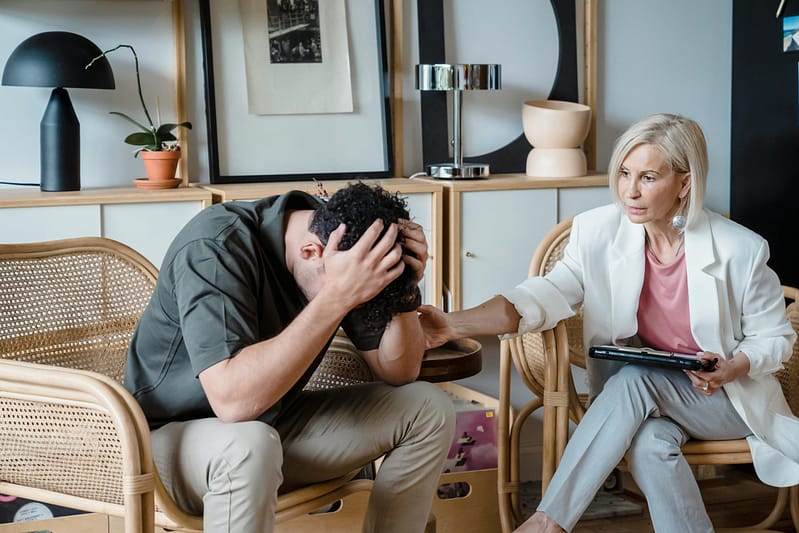
We’ve all seen it, maybe even done it ourselves. The messy but somehow still beautiful snapshots of our lives – an unmade bed, a flatlay of a study desk with piles and piles of books and notes strewn about, an insta-story of late night study sessions or staying overtime at work. A witty caption here and there about the suffering we seem to despise but simultaneously can’t stop bragging about. When did exhaustion become our aesthetic? Because that’s exactly what it is now, isn’t it? An aesthetic. Exhaustion isn’t just something we experience. It’s now something we curate. It’s so trendy now, in fact, that even Cosmopolitan has curated an entire playlist for it – ”Breathe Out the Burnout <3” because in this economy, what else can be do but listen to Post Malone wail “I fall apart” repeatedly and have Justin Bieber remind us how maybe we should love ourselves. We create moodboards around it (#burnedoutgiftedkid) and photograph it in the best lighting. We’ve learned to make our pain pretty because, perhaps, it’s easier than facing it directly. If we’re going to suffer, we might as well look good doing it. But somewhere in making our pain pretty, have we made it permanent? When exhaustion becomes your aesthetic, it becomes your identity. We’re not just tired – we’re the burnt-out friend, the overworked student, the person who’s always drowning but somehow still shows up. And that identity comes with perceived value: being exhausted means you’re needed, you’re contributing, you have work worth doing, a family worth caring for. Exhaustion has become nearly synonymous with worth. Because if you aren’t tired, then what are you doing? How are you contributing? Maybe it’s time to stop. Stop curating the breakdown, stop making the exhaustion pretty, stop turning your suffering into content that performs well. If you’re going to acknowledge that you’re burnt out, then actually acknowledge it – not with a perfectly filtered photo or a witty caption, but with the full, honest truth of it. Feel the rawness of the pain. The frustration that sits heavy in your chest. The ache in your bones that no amount of aesthetic lighting can soften. The hunger – not just for food or sleep, but for change. For more. Because only when you acknowledge the validity of your feelings, the realness of your pain, can true change and healing begin. Reaching out for support isn’t admitting defeat – it’s choosing honesty over performance. Whether it’s therapy, counseling, or simply talking to someone who understands, professional support can help you move from performing exhaustion to actually recovering from it. Your exhaustion doesn’t need to be beautiful to matter. It just needs to be honest.
“Tiktok said I have ADHD. Now what?”

The Dangers of Self-Diagnosis Have you ever come across videos like these on social media? Have the “signs” felt uncomfortably familiar? An online “checklist” seems to explain what you’ve been feeling for weeks. You feel seen, relieved, validated, and finally understood. But when self-reflection quietly turns into self-diagnosis, real mental health risks can begin to emerge. Self-Diagnosis happens when people label their mental health condition based on online information, social media content, or personal interpretation without professional advice. To be clear, self-awareness is healthy and vital. Paying attention to your thoughts, emotions, and struggles is a form of self-care. The problem arises when those observations are quickly turned into diagnoses, which can be misleading and harmful. Research suggests that problematic Tiktok use among young adults is associated with higher levels of anxiety and depressive symptoms (Galanis et al., 2025; Jain et al., 2025). This does not mean social media causes mental illness. Rather, frequent exposure to symptom-focused content encourages constant self-monitoring. Over time, repeatedly checking whether something is “wrong” may increase unnecessary fear, worry, and emotional distress when experiences fall within normal reactions to stress. Self-diagnosis can also lead to what we call a “Self-Fulfilling Prophecy.” When individuals strongly believe they have a particular condition, that belief shapes how they think, behave, and interpret everyday experiences. Avoidance, lowered expectations, or heightened vigilance may unintentionally reinforce the very difficulties they fear. Another risk is delayed help-seeking. When people feel confident they already “know” what is going on, they may hinder professional consultation, missing opportunities for clarity, support, and early intervention. Mental Health Professionals are trained to look at the whole picture, your experiences, context, history, and strengths. We listen with intent, ask meaningful questions, and offer care. If something does not feel right, noticing that is not weakness, it is awareness. Seeking professional help is not a failure; it is often the first step toward understanding and healing. You do not have to figure this out alone. You deserve care that goes deeper than a 60-second video. References: Galanis, P., Katsiroumpa, A., Katsiroumpa, Z., Mangoulia, P., Gallos, P., Moisoglou, I., & Koukia, E. (2025). Association between problematic TikTok use and mental health: A systematic review and meta-analysis. AIMS public health, 12(2), 491–519. https://doi.org/10.3934/publichealth.2025027 Jain, L., Velez, L., Karlapati, S., Forand, M., Kannali, R., Yousaf, R. A., Ahmed, R., Sarfraz, Z., Sutter, P. A., Tallo, C. A., & Ahmed, S. (2025). Exploring Problematic TikTok Use and Mental Health Issues: A Systematic Review of Empirical Studies. Journal of primary care & community health, 16, 21501319251327303. https://doi.org/10.1177/21501319251327303
The Power of Wrong Choices: Why Missteps Can Lead to Meaningful Change

There are times when life feels out of control—when no matter how hard we try, things just don’t go our way. It may feel like we’re at the mercy of forces beyond our control. Even the decisions we once felt sure of can lead to disappointment, leaving us anxious about making the next wrong move. But here’s the truth: it’s okay to make the wrong choices. In fact, they can be powerful catalysts for growth. Here’s why: 1. We Learn to Try Again—DifferentlyMistakes challenge us to approach things in new ways. They open the door to resilience, helping us refine our methods and stretch our potential. 2. We Discover Through ExplorationWrong turns often lead to the most defining journeys. By reflecting on our choices and understanding their impact, we begin to discover paths that better align with our strengths and purpose. 3. We Connect and Uplift OthersHaving gone through the same struggles, we can better support others. Our empathy becomes a source of strength—not only for ourselves but for those who look to us for guidance. 4. We Embrace Our Whole SelvesMistakes are not separate from our identity—they’re part of what shapes us. Accepting both our wins and flaws allows us to see ourselves with compassion and clarity. 5. We Grow in Deeper WaysWhen we stop seeing mistakes as dead ends and start seeing them as lessons, they become tools for transformation. Every misstep holds potential for meaningful change. One wrong move doesn’t define your future. Even the smallest decisions—like choosing to try again—carry weight. Because every choice, whether right or wrong, has the power to create change.
The Silent Struggle: How Parents Can Support Their Children’s Mental Health

In today’s digital world, kids and teens silently battle anxiety and stress every day. Social media, academic pressure, and global uncertainties create heavy burdens that many young people find hard to talk about. Parents and caregivers play a vital role in protecting their children’s mental well-being. While it can be tough to know where to start, here are simple, practical ways to help your child feel safe, supported, and heard. 1. Recognize the signs early Sometimes, normal teenage behavior masks deeper issues. Look out for: If you notice these changes, don’t ignore them. A small conversation today could prevent bigger problems tomorrow. 2. Keep communication open and safe Children open up more when they feel safe from blame or judgment. Try saying things like: Be patient if they don’t talk right away. Just knowing you care and are ready to listen builds trust. 3. Talk about online dangers Social media can be both helpful and harmful. Discuss with your child how to handle online bullying, misleading content, and peer pressure. Check in regularly about their online world — not to control them, but to protect them. 4. Model healthy coping Kids learn by watching adults. Show them how you handle stress by: Healthy habits at home teach children to manage their emotions and challenges as they grow. 5. Seek help when needed If your child’s struggles persist or worsen, don’t hesitate to get professional support. Therapists, counselors, or pediatricians can offer guidance and treatment. As UNICEF reminds us, a loving, engaged parent is the best safety net for a child’s mental health. Raising emotionally strong kids isn’t about having all the answers — it’s about showing up, listening, and seeking help together when things get tough. Start the conversation today. By ending the silence, we can save lives, heal families, and raise a generation that knows how to care and be cared for.
The 5th iCare Mental Health Expo Highlights

There is no health when there is no mental health. The fifth iCare Mental Health Expo was held at the Ayala Malls Central Bloc, Cebu IT Park, on November 8, 2022, from 10 AM to 8 PM, with the theme; Making Mental Health and Well-being for All a Global Priority. Ms. Scarlett Jade Mapa hosted the program, and it started with the opening remarks of Gestalt Wellness Institute’s resident psychologist Ms. Rennyvone Ledesma. Miss Ledesma welcomed the participants and introduced them to the aspirations of iCare and its connotation; C for connect, A for awareness, R for respond, and E for embrace. 1. The iCare Mental Health Talk Show Professional guest speakers, Mr. Philipp Chen Tan, a psychologist; Dr. Joseph James Lim, a psychiatrist; and Ms. Luzlin Pagaran Elcullada, a guidance counselor, talked about listening and showing care for others without compromising one’s mental health. They also discussed how to address mental health concerns in the community, classrooms, and barangay. They emphasized that for mental health to become a global priority and dissolve the stigma, authorities, advocates, and experts should make it more accessible to the public with the help of sufficient funds. 2. Open Forum After the Mental Health Talk Show was the open forum, wherein participants were given the time to ask the guest speakers relevant questions. Questions like, “How do you relate to something you haven’t experienced?” to which Mr. Lim responded, “You do not have to experience to understand.”, and “You can ask more.” Asking questions shows care, but when you feel like it is out of your expertise, ask for help from the professionals. Although self-care is mainly about knowing your boundaries and learning when to say no, it differs from person to person. It’s okay to be there for someone but not at the expense of your mental health. Thus, another way to show care for someone else is to refer them to professionals. 3. MHPSS The next part of the program was Mr. Laborte’s presentation on “Capacity building on MHPSS for the CSOS in the Philippines.” He presented how they contribute to developing mental health advocacy in the Philippines in collaboration with different organizations. 4. Trivia Time. Mr. Kirk Patrick Castro, the founder of iCARE Mental Health Expo and the Director of Gestalt Wellness Institute Inc., discussed the importance of giving care. Mr. Castro emphasized, “The most important person you have to satisfy in life is yourself.” And that, “If you know how to take care of yourself, then you know how to take care of others.” He also discussed mental illnesses’ “warning signs” and how important awareness is. Unmanaged stress often results in anxiety, which is a gateway to depression. “Define boundaries. Recognize triggers of anxiety and know how to calm yourself,” he added. 5. Games and activities To create a supportive community, Mr. Abrea Segundo Jr. organized games, challenges, and activities for the participants. The participants come from different universities; thus, the activities were designed for them to introduce each other and build connections. This is considered a step toward building a community that is caring and supportive of each other. 6. Fellowship with Sugbuanon artists Lastly, there was the fellowship with local Sugbuanon artists, which falls under the aspirations of iCARE; to give and build care. Inviting local artists to the expo shows support and care for growing artists. To a certain extent, the artists get to perform on stage and share their passion. Pursuing iCare Mental Health Expo every year is a step towards building and sustaining a supportive community for everyone’s mental health. Hats off to mental health professionals and advocates who dedicated time and effort into this purpose. It costs nothing to be kind; but it can save lives. You may also like The Power of Wrong Choices: Why Missteps Can Lead to Meaningful Change The Silent Struggle: How Parents Can Support Their Children’s Mental Health Load More
How to Open Up To Your Loved Ones About Your Mental Health

“OA RA.” This is what we often hear when opening up about our emotional struggles. What hurts most is it comes from those we love— such as our family or relatives. As we spend time with them, we may do ourselves a favor and recreate a home that nurtures rather than destroys our well-being. Here’s how we can open to our loved ones about our mental health. 1. Plan what to talk about. Planning about what, where, and how you’ll address your struggles helps you overcome the triggers surrounding the topic. You may list the following points to not miss anything during the conversation: It’s best to do it casually during an intimate gathering or family dinner. You may also have a private, one-on-one conversation with the family member you’d like to speak with. 2. Address objections Stigma exists because of lack of awareness. Addressing these objections can help your family understand your mental health concerns better: Objections Explanation “Wala mani saunang panahon.” “Tapulan lang jod ka/sila.” “Huna-huna rana nimo/nila.” “Naa ni sauna, pero mas na educate and na aware lang ang mga tao karon.” (Mental illnesses have always existed. It’s just that people are more educated and aware now.) “Na overwhelm sila and nahurot na ilang energy pagtry ug survive. Mao gamay nalang ilang energy pag trabaho.” (They’re overwhelmed or have exhausted their energy trying to survive; thus, have less energy to work.) “Tinuod ang mental illness ug maka affect pd ni sa akong physical health ug relationships.” –Mental health can affect physical health and relationships. 3. Empathize. When talking about your mental health, you should understand your family’s mentality. This helps you communicate your issues more effectively. Empathizing makes you realize that: Their lack of awareness and own struggles won’t excuse their behavior. However, empathizing helps you get your point straight and make yourself clear to them. 4. Be vulnerable. Instead of avoiding awkward conversations about how you feel, face them. You can show your family that being emotional and sensitive is okay. You can initiate vulnerability by saying: While vulnerability is difficult, it can be powerful. It fosters intimacy in families because it tells how much you entrust your thoughts and emotions to them. Raising awareness and breaking the stigma attached to mental health can start in our families, but it still is a challenge. Our families might feel close to us, but this doesn’t guarantee that they are familiar with our struggles or ready to support our healing. Let’s give them time to slowly process the information or perhaps get a mental health professional to help them with the difficult conversations. Our psychologists and psychiatrists here are GWISEA are available from 9 am-8 pm Tuesdays to Fridays. We provide specialized and quality multidisciplinary services as a collaborative, efficient, and sustainable mental health institution committed to self-discovery and expansion.